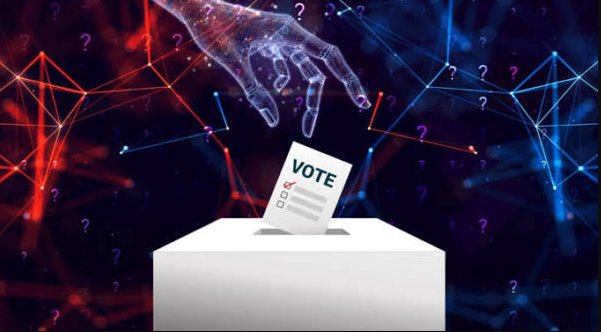
Synthetic Media in Elections: How Voters Can Think Clearly in an Age of AI
Election information has always been vulnerable to rumor, selective editing, and propaganda. Generative AI adds a new capability: political messages can now be fabricated in the appearance or voice of real candidates, or created as realistic scenes that never happened. The result is a faster and more confusing information environment in which voters must evaluate not only what a message says, but whether the depicted event occurred at all.
Synthetic political media can be used for satire, education, accessibility, artistic expression, or campaign communication. It can also be used to impersonate candidates, suppress turnout, inflame conflict, and discredit legitimate journalism. The existence of deepfakes does not mean every controversial political clip is fake. It means that high-impact claims deserve stronger verification.
The main forms of election-related synthetic media
A manipulated video may make a candidate appear to say something outside the original context. A face-swap may place a candidate in a scene where they never appeared. A cloned voice may deliver a false voting instruction. A generated image may depict a fabricated protest, endorsement, arrest, or disaster.
Some content is persuasive because it is realistic. Other content is persuasive because it is emotionally efficient. A crude image can still spread widely if it confirms a belief or provokes anger. Technical quality is therefore only one part of the risk assessment.
The most harmful material often combines synthetic media with accurate personal information. A fake message may mention the correct polling place, candidate name, or local issue while giving a false instruction. Familiar details can make the false part seem trustworthy.
Why elections are especially sensitive
Election information is time-dependent. A false instruction shared shortly before voting may be difficult to correct because people have limited time to check it. A fabricated video may dominate attention before journalists can investigate. Even after a correction appears, the original emotional impression may remain.
Political deepfakes can also produce a “denial problem.” Once voters know that fabricated media exists, a candidate may dismiss authentic evidence by claiming it was generated. This uncertainty damages public discussion even when no one believes a particular fake.
The appropriate response is not to reject digital evidence. It is to strengthen the chain connecting a claim to its source, context, and independent confirmation.
A voter’s verification process
Begin with the source. Is the content published by an official campaign, a recognized news organization, an anonymous account, or a page that appeared recently? An official account can still publish misleading material, but an anonymous repost should not be treated as primary evidence.
Find the full version. Short clips often remove the words before and after a statement. Search for the complete speech, debate, interview, or press conference. Compare the audio and video with recordings from reliable sources. If the clip concerns a public event, check whether attendees, local journalists, or official records confirm that it happened.
Check timing and location. Search the candidate’s schedule, event announcements, weather conditions, and visible landmarks. Reverse-image search can show whether an image was created for a different event. Search the exact wording of captions because a false claim may have been copied across many accounts.
Use labels as evidence, not as substitutes for judgment. A platform label, campaign disclaimer, or content credential can help, but no label system catches every manipulation. Likewise, the absence of a label does not prove that content is authentic.
What political organizations should do
Campaigns and public institutions need a clear disclosure policy for synthetic content. If a campaign uses an AI-generated image for a harmless creative purpose, it should say so in a way that viewers can understand. If a video alters a real person’s appearance or words, the disclosure should be prominent rather than hidden in a profile or a long caption.
Organizations should protect official communication channels. Voters need to know where genuine voting information will be published. A campaign or election office can reduce confusion by maintaining verified websites, consistent social accounts, and clear procedures for correcting false messages.
Internal controls matter as well. Staff should preserve original files, record who approved a message, and maintain access to publishing accounts. Strong authentication and limited administrative access can reduce the chance that an attacker will publish a convincing fake through a legitimate channel.
What platforms and journalists should consider
Platforms face a difficult balance. Removing every manipulated political image would risk suppressing satire and legitimate commentary. Leaving every deceptive impersonation online can create measurable harm. Rules should focus on deception, impersonation, timing, and likely consequences rather than on the mere use of AI.
Journalists should avoid embedding a fake repeatedly in a way that increases its reach. Reporting on a deepfake should explain the claim, the verification process, and the evidence showing why it is false. Headlines should not repeat the false statement without context. Newsrooms can also publish source files and corrections in a transparent manner when appropriate.
What voters should avoid
Do not share a political clip because it makes you angry or delighted. Do not assume that high view counts indicate authenticity. Do not treat a screenshot as a complete record. Do not forward voting instructions until they have been checked against an official election source.
Be especially careful with messages that discourage a group from voting, announce a sudden change in voting procedures, or ask for money using an unusual method. Confirm such information through the relevant election authority rather than through a campaign post or influencer video.
Preserving democratic judgment
Synthetic media creates a temptation to focus entirely on technical detection. Voters also need civic habits: reading beyond headlines, comparing sources, and distinguishing reporting from commentary. A healthy information environment does not require every person to perform forensic analysis. It requires people to recognize when a claim is important enough to verify before sharing.
The future of election communication will include legitimate synthetic tools. Candidates may use translation, accessibility features, virtual presenters, and creative visualizations. The democratic standard should be straightforward: viewers deserve to know when a person, statement, or event has been artificially represented in a way that could affect their understanding.
The central question is not whether AI appeared somewhere in the production process. It is whether voters are being given enough information to distinguish reality from representation. Transparency, provenance, independent reporting, and careful public skepticism can help preserve that distinction.
References
[2] NIST AI Risk Management Framework
[3] UNESCO Recommendation on the Ethics of Artificial Intelligence
